Hi there, and welcome to On Background, my weekly media newsletter. The big news this week in the ADWEEK newsroom is that the Super Bowl is finally behind us, and that the weather in New York appears poised to snap its 14-day streak of sub-freezing temperatures. Needless to say, spirits are high. My feature story this week explores one of the more fascinating marketing stories of our time, which is what ads will look like when they arrive in answer engines. Last week, OpenAI began introducing ads into its chatbot, while Anthropic, which recently vowed to never do the same, quietly walked back that claim in its Super Bowl ad, laying the groundwork for it to one day succumb to the inevitable. While much attention has been rightfully paid to the in-product ads themselves, answer engines represent more than simply a new surface for advertising; instead, they are the foundational layer of an entirely new ecosystem, which means novel user journeys and therefore novel marketing strategies. Below, I detail a new offering from the startup Evertune, which has partnered with adtech platforms The Trade Desk and Index Exchange to help marketers target users just after they have used an answer engine—a new class of high-intent shopper that offers a host of new possibilities. Below that, check out my conversation with Iz Harris, the chief executive of the YouTube creator collective Newpress, which has over 10 million collective subscribers and purports to be the first news creator collective on the platform. The startup is unveiling a proprietary platform next week—think Slack on steroids—as it works to turn its massive YouTube viewership into the makings of a new media company.
But first, a collection of news, notes, tips, and scoops that you need to know. As always, replies to this newsletter go directly to my email, so please feel free to reach out with any thoughts. And if you are not subscribed to On Background, click here to do so for free.
|
|
|
If you were forwarded this newsletter, you can sign up here. |
|
|
Super Bowl Bonanza: The ADWEEK newsroom covered the Super Bowl from tip to tail over the course of the last week, chronicling every ad that made the Big Game, as well as the best and worst spots that ran during the lopsided contest. ADWEEK also premiered its first live-stream analysis of the ads, with segments running before, during, and after the game that featured a rotating cast of editors, reporters, and social strategists, as well as insights from our partners at ViralNation, who helped track public sentiment. Overall, I was underwhelmed by most of the ad creative, although I did enjoy the Levi’s and Fanatics spots. I really hated the Coinbase ad. - Food52 Is Served: The Food52 saga has finally reached its conclusion. On Friday, the publisher was sold in a Delaware bankruptcy auction for $10.3 million to America’s Test Kitchen, as I told you would happen last month. Its subsidiary brands, Schoolhouse and Dansk, were also snapped up — the former to Troy-CSL Lighting for $2.2 million and the latter to Form Portfolios for $250,000. Together, the transactions value the three businesses at about $12.75 million, roughly 4% of their peak valuation. For The Chernin Group, the private equity backers that invested over $100 million into the venture, the outcome represents a steep loss.
Run-a-Muck Sizes Up (Exclusive): The production studio Run-a-Muck, whose cofounder Pamela Drucker Mann led revenue at Condé Nast for nearly two decades until her departure in 2024, is quietly assembling a talented team to lead the venture. This week, the firm brought in Kimberly Diaz, most recently of Wondery and Google, to lead its advertising and brand partnerships. Last year, it also added former Paper editor in chief Justin Moran to helm its flagship Substack, called Drafting. The startup currently has more than 20 projects in development, including a television series produced by Kristen Stewart and an adaptation of the novel Stag Dance. Amazon Eyes Content Marketplace: Amazon is exploring launching a content marketplace, making it the second technology firm to do so behind Microsoft, according to reporting from The Information. I hinted at this in December, when I noted that a passel of media executives had flown to Seattle to speak with the retail giant about the possibility of it paying for their content, but it appears the concept has grown more serious in recent weeks. Along with the Microsoft news, this is a positive development for publishers: If the backers of major LLMs begin paying content creators to use their data, it could lead to revenue in the short term and, more importantly, the formation of a competitive market for websites’ content in the long term. Playboy Comes to Substack: For anyone who has ever defended their Playboy patronage by saying they read it for the articles, now you have no excuse. The legendary publisher joined the newsletter platform Substack on Wednesday, where it plans to showcase a collection of archival material, as well as new fiction and nonfiction alike from rising writers. I was put on to the premiere by one of my favorite Substack authors, Magdalene J. Taylor, who writes the sex and relationships column Many Such Cases and is an editor at Playboy. Given the historically fraught state of sex and dating, Playboy has a legitimate opportunity to springboard itself back into relevance, if it can take its task seriously enough to do so.
|
|
|
THE LEDE Retargeting Has Found Its Way to the Chatbots |
A new product will enable brands to target users as they move from answer engine to webpage. Sound familiar? |
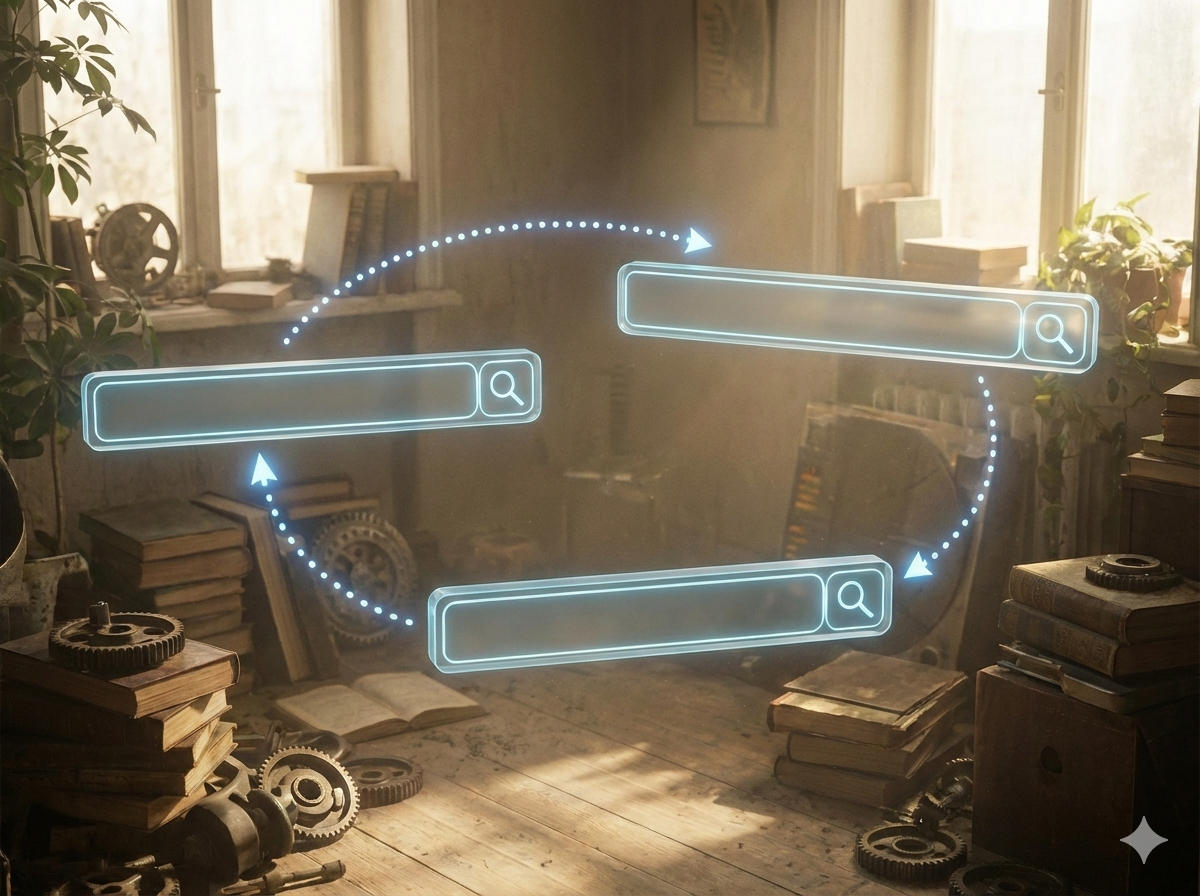
In the emerging world of answer engine advertising, everything old is suddenly new again. Indeed, as the ecosystem gradually welcomes brands into the fold, many of the tools that shaped the last decade of digital marketing are reemerging in the space, albeit in a format tailormade for chatbots. On Wednesday the generative engine optimization (GEO) firm Evertune debuted an expansion of its Partner Connect offering, which will bring retargeting to the world of large language models. The product, launched in partnership with the demand-side platform The Trade Desk and supply-side platform Index Exchange, will enable marketers to serve ads on websites that users visit after exiting an answer engine session. The offering serves the roughly 12% of answer engine users who click through to a webpage following a chatbot session, according to Evertune CEO Brian Stempeck. “Between ChatGPT, Gemini, AI Overviews, Sir, Amazon, and Walmart, AI search is becoming ubiquitous,” Stempeck said. “This is where consumer behavior is headed.” The product accomplishes several objectives for brands, according to Stempeck. First, until recently, it has been impossible for marketers to reach answer engine users, as none of the most popular products had yet integrated advertising. In recent weeks, OpenAI has begun a cautious rollout of a limited advertising product, but the ecosystem remains largely impenetrable to brands. With retargeting, these brands can now target users as soon as they leave a chatbot, giving marketers an opportunity to influence users as they exit the space, presumably motivated to take some action now armed with new information. And though the audience is still a relatively small percentage of total users, these particularly meticulous browsers exhibit a high level of intent, making them of heightened value to marketers. Second, brands have only a limited ability to shape how they show up in answer engines’ answers. (Influencing how companies appear in chatbot results is the primary function of GEO, which is just SEO for the answer engine era.) By advertising to these users as soon as they leave these conversational walled gardens, brands can reinforce positive messages, rebut negative ones, or introduce themselves if they were omitted from the organic results entirely. There is a key caveat. As of now, Evertune is able to tell marketers what specific webpages users are likely to end up on based on a probabilistic research method, which entails running thousands of simulated prompts, finding the pages that are cited most frequently, and then selling inventory on those pages. As a result, the product is currently better understood as a contextual buy, rather than an audience-based one. But in the next month or so, according to Stempeck, Evertune will unveil the next iteration of its offering, which will enable marketers to retarget users specifically. Publishers already know the referral source of their traffic, according to Index Exchange chief customer officer Marybeth McGaugh. By combining the referral source (ChatGPT, for example) with the specific webpage they landed on (Best Family Friendly SUVs Under $40,000), the publisher will be able to determine what the user had searched for in the answer engine. Working backward from that, marketers can then retarget those users based on their chatbot queries. The technology is less a quantum leap forward in advertising technology than it is the latest in a series of incremental gains. For many marketers, that is welcome news: Much of the industry has spent the last two years holding its breath, waiting to see what advertising in answer engines might look like. For better or for worse, the advertising infrastructure now emerging appears to be generally similar to what came before it. As always, this is both a comfort and a missed opportunity. “We believed it was inevitable that the answer engines would roll out ads,” Stempeck said. “What we think about now is: What happens next?’” |
|
|
"Congrats, Larry [Fink], you got your long-termism. It comes with AI porn generated in space, but you got it." |
— Semafor’s Liz Hoffman, on the oddly long-term thinking emerging from Silicon Valley, READ MORE |
|
|
"Taken together, these statements are extraordinary: the owners of capital warning workers that the ice beneath them is about to crack — while continuing to stomp on it." |
— The Atlantic’s Josh Tyrangiel, on what AI will do to employment, READ MORE |
|
|
"Language is, or rather was, our special thing." |
— The New Yorker’s Gideon Lewis-Kraus, on the humanity of LLMs, READ MORE |
|
|
"Philosophers describe the ‘problem of expensive tastes’; today’s luxuries become tomorrow’s necessities." |
— The New Yorker’s Joshua Rothman, on the double-edged sword of taste, READ MORE |
|
|
Iz Harris is the chief executive of the startup Newpress, a collective of YouTube news creators cofounded by former Vox journalist Johnny Harris. Newpress, which will launch its proprietary platform next week, includes Johnny Harris and three other creators—Sam Ellis, Christophe Haubursin, and Max Fisher—who have over 10 million YouTube subscribers between them. The four, which are backed by a full-time staff of around 30, reflect the growing prominence of YouTube as an incubator for new media ventures. This interview has been edited.
Mark Stenberg: How would you describe Newpress? Iz Harris: It’s a media company that produces journalism on all social platforms. We operate like a lot of newsrooms, in that we have processes for pitching, fact-checking, and publishing, but all of our ideas come from our creators, all of our creators have their own shows, and everything is done in their own voice. Mark: Your four creators have, up till now, largely lived on YouTube. What will the Newpress platform unlock? Iz: Think of it as Slack on steroids. It’s a community platform: We want our contributors to participate in our process, to ask questions, and to provide tips and connections. We’ve let 25,000 people off the wait list and will let in the other 25,000 next week. Joining and participating is free, but we are going to launch a membership program, for about $60 a year, that will allow members access to exclusive perks, like AMAs. By the end of the year we hope to do $1 million in membership revenue, from about 17,000 paying supporters. Mark: How does Newpress make money? Iz: About 95% of our revenue comes from ads, mostly host-read ads supplemented with AdSense. We hope to evolve that to attract more premium advertisers, which we anticipate happening as television ad budgets increasingly migrate to streaming and YouTube. This year, we are on pace to bring in around $7 million in revenue and have been profitable from day one. We have never taken any outside investment, but we have lately considered the idea as a way of accelerating our growth. Mark: How does the revenue get split among creators and staff? Iz: Newpress owns the intellectual property of all the shows, and we pay our creators and staff a salary. Once a creator’s show reaches breakeven, they get a revenue-share. Our pitch is that a solo creator might make more money on their own, but as part of Newpress they can focus solely on their work while we manage the business and provide operational support. We just brought on Max, and we hope to bring in one to two new creators a year. Mark: Why YouTube? Iz: We identified what we do well — creator-led visual journalism — and want to do that well over and over again. YouTube is the best home for that. We have been tempted to expand to other platforms but are doing so cautiously. We also find that, especially among younger audiences, people want to learn from people, and that the best stories come from creators excited about telling them. There really is no precedent for what we are doing, but we think this model is built for where media consumption is trending. |
|
|
Mark Stenberg is Adweek's senior media reporter covering the business of digital and print media and publishers, including their advertising, marketing and editorial strategies. Before joining Adweek Mark was a reporter for Business Insider. | |
|
|
|