Click here to view this email in your browser 

Image

Hi all, and welcome back to the latest edition of On Background, my weekly media newsletter. 


I am writing from the overcast ADWEEK offices in New York, where a cold front has managed to follow me back from Austin—my second visit in a month, yes, but this one was for the gorgeous wedding of my friends Hannah and John. Continuing the festivities, my parents are visiting the city this week from Seattle, so please join me in manifesting a last-minute reservation at The Odeon.


In tonight’s feature, I explore the latest developments surrounding the ongoing effort to sell Vox Media, reporting based on conversations with multiple sources in and around the company. While discussions surrounding the spin-off of its podcast network are advanced, the other elements of its portfolio present a separate challenge. 


In my Q&A below, you will find my conversation with Christine Cook, the chief commercial officer of Bloomberg Media, which recently surpassed 720,000 paying subscribers. The company has benefited from its position at the nexus of several major media trends: It serves a business audience, produces reams of video, and has a benevolent billionaire owner. Now, it’s looking to capitalize on that momentum with an expanded slate of events, video programming, and editorial franchises. 


Before that, I have compiled a few tips, scoops, and notes from the week that was, including a scoop about Microsoft, a slew of OnlyFans spin-offs, and the global ambitions of Substack. 


As always, replies to this email go directly to my inbox, so please feel welcome to share your feedback. And if you are not subscribed to On Background, click here to do so for free.

MARK STENBERG, SENIOR MEDIA REPORTER, ADWEEK
mark.stenberg@adweek.com   |  @markstenberg

If you were forwarded this newsletter, you can sign up here.

TALKING HEDS

  • Microsoft, Macro Payments (EXCLUSIVE): The new content marketplace offering from Microsoft, through which the company pays participating publishers for using their content to populate its Copilot answers, has already paid out more than $10 million since its launch late last year, according to Tim Frank, Microsoft’s corporate vice president for AI monetization. The sum might be small, but it is still significant—after all, I have written far more about far smaller such payments in the past. Microsoft is betting that, in paying for premium inputs, its answer engine will yield premium outputs, thus differentiating it from answer engines scraping the open web indiscriminately. So far, according to Frank, the early results support that hypothesis—news that publishers, no doubt, are thrilled to hear. 

  • Le Sub: Substack has gone global. The platform now counts more than 30,000 creators outside the U.S., and its European contingent alone is earning more than $90 million annually, according to data the company released on Wednesday. In total, more than 100,000 creators globally are earning money on the platform. As artificial intelligence continues to overwhelm both the open internet and social platforms with synthetic content, the 5 million paying subscribers on Substack only grow more appealing. Forget David Ellison buying The Free Press—how long until someone buys Substack itself?

  • OnlyFans’ Fans (EXCLUSIVE): On Thursday, a former member of the OnlyFans founding team, R.J. Phillips, is launching a new social platform called Zoop. The company aims to challenge OnlyFans, with a model that similarly enables creators to paywall their content. As fate would have it, the launch marks the second such product to launch from a former OnlyFans executive this month. Last week, OnlyFans former chief executive Ami Gan unveiled Vylit, which functions similarly to the adult platform except with added AI controls. What is it about OnlyFans that makes former staff feel so certain they can improve upon it? If history is any indication, sometimes being first is better than being the best. 

  • Family Style, Family Size (EXCLUSIVE): A decade ago, Complex built First We Feast, along with franchises like Hot Ones, into a pop culture goliath. Now, after losing First We Feast in the BuzzFeed divorce, Complex is keen to try again. Last week, the company announced its plan to turn Family Style, the food festival it acquired two years ago, into a year-round food media brand. The franchise has expanded from one event to seven and will soon debut four new series of original programming. The company’s goal is to cross $20 million in revenue this year. One of its new shows? An interview series where the host and guest eat a series of fortune cookies, as hilarity presumably ensues. The premise feels oddly familiar ... 


THE LEDE


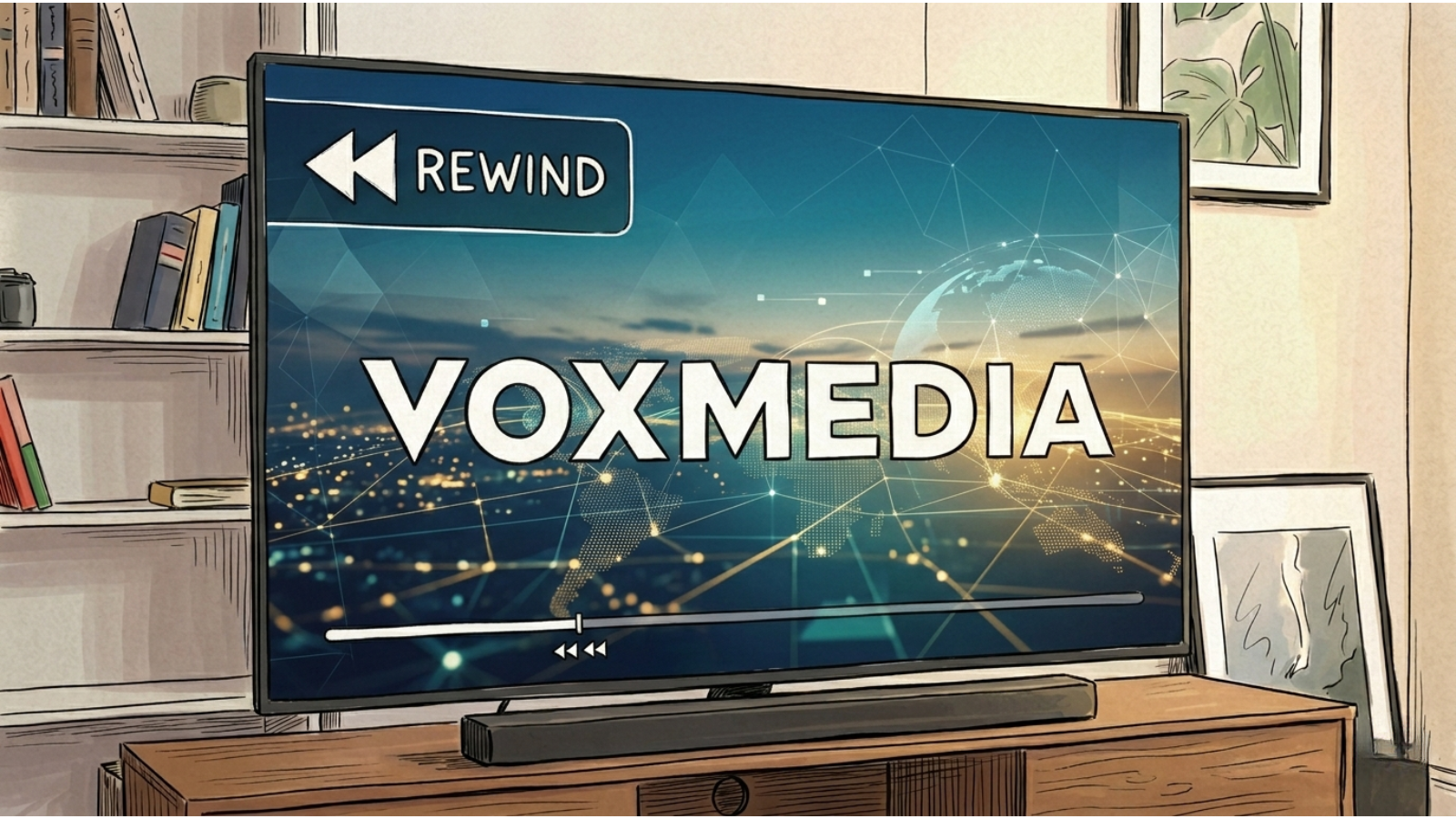
At Vox Media, the Roll-Up Era Rewinds

After a decade of acquisitions, the company is seeking new homes for its brands, according to five people familiar with its plans

Vox Media, one of the preeminent editorial roll-ups of the last decade, is expected to unwind parts of its portfolio in the coming months via a combination of sales, spin-offs, and divestitures, according to five people familiar with the company and its finances.


The house of brands, which was assembled through a series of acquisitions since its founding in 2011, now appears poised to disassemble in a similarly incremental fashion.


Since the pandemic, the value of Vox Media has been shrinking faster than its constituent elements can be optimized, according to three of the people. 


That reality spurred chief executive Jim Bankoff to begin exploring potential exit strategies for the company several years ago. The $100 million investment Vox Media received from Penske Media Company in 2023, widely interpreted inside the company as a prelude to acquisition rather than a vote of confidence, has only accelerated the expectation.


“The value that these businesses once held is shrinking,” said one person close to the business. “It’s harder to compete now than ever. It doesn’t feel like it is getting more valuable.”


Vox Media declined to comment on the record.


The Vox Media hierarchy 

Across its portfolio, Vox Media generates revenues of between $400 million and $500 million, according to three people with visibility into its finances. 


Two sources pegged the figure as closer to $400 million, while another said $500 million is plausible only with podcasts folded in. Either way, the sum is meaningfully lower than the roughly $600 million figure that The Information reported in 2023. 


One of the primary catalysts driving Vox Media to sell is the rapid decline in traffic across its portfolio. According to one source, readership to its lifestyle brands has fallen roughly 50%. That drop arrived "faster than anyone expected," they added. 


This downward pressure has long motivated efforts to sell, but finding a single suitor for the entire portfolio, whose coverage ranges from sports to dining to technology, has proven next to impossible. Few strategic buyers would benefit from absorbing such a heterogenous mix of titles. 


Meanwhile, financial buyers like private equity firms, which are struggling with broader macroeconomic factors and increasingly uninterested in the meager returns of digital media, have grown far more selective in their shopping. 


In response, Vox Media has adopted an unbundled approach, opting to shop its house of brands as a series of standalone titles to sensible owners. 


The most visible evidence of this decision was the announcement, made in January, that the company had split its sales operation into two independent organizations: one for its podcast network, one for its publishing business. 


The move clearly telegraphed that the podcast business, called the Vox Media Podcast Network, was being decoupled from the broader Vox Media business. According to Puck, last year the VMPN generated $60 million in revenue and more than $20 million in profit, making it an appealing business with ample room for growth. 


As such, the company has shopped the VMPN around, with interested buyers including Versant, as The New York Times reported, and Netflix, according to a person familiar with the efforts, but no deal has yet been struck. 


Regardless, any effort to sell the podcast network will have to contend with a thicket of unwelcome logistics. 


In many cases, for instance, Vox Media does not employ the talent behind the podcasts, acting instead as a sales representative for the shows. As a result, one source suggested, rather than buy the entire network outright, an interested party could presumably wait until the contract governing their desired show expired, then outbid Vox Media for it. 


Similarly, several popular podcast franchises are attached to brands within the editorial portfolio, such as the show Decoder with Nilay Patel, who is also the editor in chief of The Verge. Separating podcasts from their editorial platforms makes sense in theory, although in practice could prove challenging. 


Likewise, selling the publishing division of the Vox Media portfolio presents a separate set of challenges, as the individual brands vary in their commercial health and prospects.


At the top of the Vox Media hierarchy is SB Nation, a network of sports blogs that brings in between $50 million and $100 million in revenue, according to a person familiar with its finances. Its lean model—the editorial is largely produced by contractors—has kept it operating profitably despite upheaval in broader traffic patterns.


Second on the totem pole is New York Magazine, which has more than 400,000 paying subscribers and a wealth of cultural capital. The media brand generates more revenue than SB Nation, but its thin margins make it a less attractive asset, according to three sources. The magazine did more than $100 million in revenue last year but drew a profit of only around $6 million, per Puck. 


The Verge and Eater generate the third and fourth-most revenue in the portfolio, trading places depending on the year, according to five people familiar with the brands.


The commercial health of The Verge is largely tied to the advertising budget of the technology industry, which in recent years has prioritized cost-cutting to free up cash to bankroll its investments in artificial intelligence.


Likewise, Eater produces significant top-line revenue but carries thin margins because its cities-based reporting model and video production are expensive to maintain, according to two of the people. It had a banner year in 2024, but pressure from tariffs led to a substantial decline in revenue according to a person familiar with the brand.


While these four brands represent the premium arm of the Vox Media portfolio, the remaining dot-com assets of Vox, The Dodo, Popsugar, and Thrilist make up its value division.


Vox, although the namesake of the company, has struggled to keep pace with its legacy peers. 


Its news orientation and historical dependence on social traffic have proven to be commercial headwinds, according to two people familiar with the company. To compensate, it has pivoted its content strategy, launching a paywall and expanding its newsletter offerings in a bid to capitalize on its brand equity. In the Vox Media hierarchy, it now falls somewhere between the premium set and the Group Nine assets. 


In hindsight, Vox Media’s purchase of Group Nine marked a severe misstep, according to all five people. The tie-up occurred at the peak of the pandemic bubble, meaning Vox Media traded its stock for a group of editorial assets whose traffic soon cratered. 


In doing so, it brought over the brands Thrillist, The Dodo, NowThis, and Popsugar, all of which have dropped precipitously in value since the tie-up. Since joining Vox Media, Thrillist has been folded into Eater and Popsugar has endured a series of rebrands. 


“The Group Nine acquisition didn't work out the way that anyone wanted it to,” said one source.


As standalone titles, the former Group Nine titles will likely be difficult to sell. But Vox Media has had success in rehoming some of its smaller brands. 


In 2023, it spun NowThis off into nonprofit ownership, and in 2024, it sold the gaming brand Polygon to Valnet for around $20 million, according to two people familiar with the deal, the details of which have not been previously reported. 


What Vox Media built over a decade took dozens of deals to assemble. Taking it apart, it turns out, may take nearly as many.

 

PULLED QUOTES

"[Zaslav]’s like a funeral parlor attendant who dressed up the corpse, made it look good enough for the funeral—good enough to sell—and is getting away with half a billion dollars."

— An anonymous Hollywood executive, on David Zaslav’s stewardship of WBD,

READ MORE

"[Allbirds] is not the only brand that soared in the 2010s on the back of enthusiasm from young shoppers only to come crashing back down in the past few years."

— The Economist, on the decline of millennial brands like Allbirds, Casper, and Warby Parker,

READ MORE

"When I realized that there was not going to be any context given, I was a little annoyed."

— Podcast fan Jordan Blair, on the downside of video-first podcasts,

READ MORE

"You wanna go to a thousand-dollar dinner and have an amazing evening and then sometimes get a gift on top of it and be paid for it? It’s crazy."

— Bravo celebrity Jeff Lewis, on the allure of Fan Social,

READ MORE


QUOTE/UNQUOTE

Christine Cook is the chief commercial officer of Bloomberg Media, which last week hosted its Upfront presentation, an annual showcase of new editorial programming, ad products, and technology.


The publisher, a division of Bloomberg L.P., has found itself at the nexus of several favorable trends: It serves an affluent business audience, produces reams of premium video programming, and has a largely benevolent billionaire owner. 


As such, it has benefitted from many of the paradigm shifts that are otherwise upending the media industry, notching a 6% increase in first quarter advertising growth, a 30% increase in sponsorship revenue from live events, and 4.5% growth in hours watched. The privately held media company now has more than 720,000 paying subscribers, up 10% year over year. 


This interview has been edited.

Mark Stenberg: What new products did Bloomberg Media unveil at its Upfront last week?


Christine: Much of our focus was on doubling down on what is working. We expanded The Weekend, which we launched last year, by adding new talent and programming. We talked about the expansion of Bloomberg Live, which has seen huge growth and helped us achieve an 82% client retention rate. We also mentioned the Bloomberg New Economy Forum, which spotlights the next wave of economic growth and will convene in India this October.


Mark: I covered the launch of The Weekend and read it regularly. How has it grown?


Christine: We launched a new show, Bloomberg This Weekend, in February, and we transformed the podcast from our Bloomberg Businessweek editor at large, Mishal Husain, into a video series. The Weekend franchise has enabled us to reach our audiences seven days a week, serving our audience of business decision-makers in a different context. That has led to a 35% increase in luxury advertising revenue, as brands want to reach high net worth individuals.


Mark: Many news publishers are rushing to stand up video programming, but Bloomberg Media has been producing business programming for years. How are you evolving those capabilities? 


Christine: We have premium video programming on linear platforms, streaming, and YouTube, but our next push is integrating that content more deeply into our website and mobile app, an initiative that will come to fruition this fall. It has also enabled us to launch sophisticated contextual products, like our new studio offering, The Brief. That series, which we launched at CES, features business leaders in conversation with Bloomberg talent live from major events. We have done maybe 30 so far, flipping them within 48 hours and then running them alongside our coverage of the events.


Mark: I have spent countless hours chronicling how answer engines are transforming traffic patterns and forcing publishers to respond. What is Bloomberg seeing on that front? 


Christine: We are still seeing growth. The reality is that GPTs are producing a barbell effect: Especially when it comes to business news, people are seeking out trusted sources. Our numbers on subscribers, advertising, and overall growth all reflect that. 


Mark Stenberg is Adweek's senior media reporter covering the business of digital and print media and publishers, including their advertising, marketing and editorial strategies. Before joining Adweek Mark was a reporter for Business Insider.

Unsubscribe | Subscribe

You're subscribed to as brendonk14@cox.net

© 2025 Adweek, LLC. All Rights Reserved. 71 Fifth Avenue, 5th Floor, New York, NY 10003

Terms of Service  | Privacy Policy