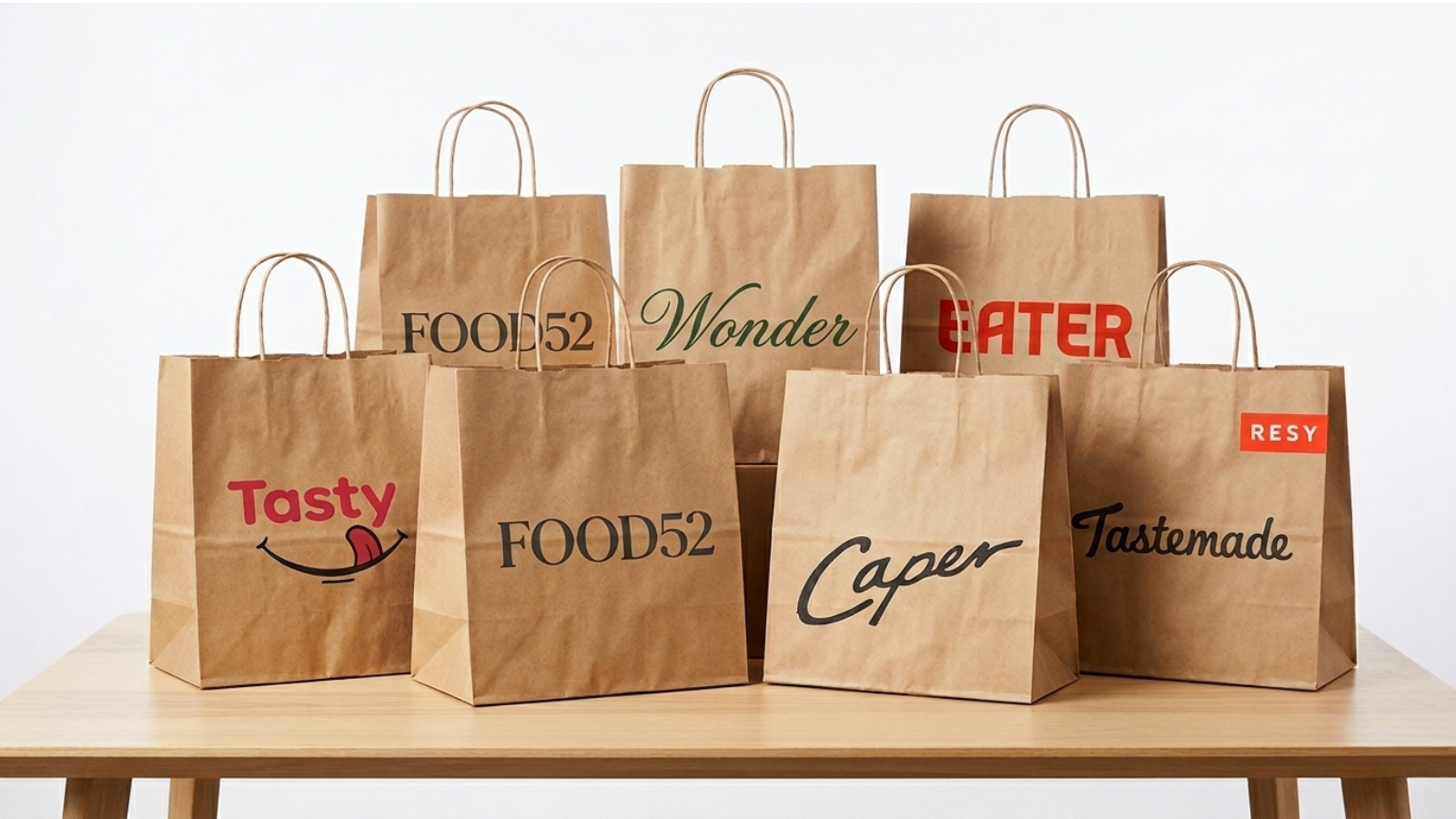
In the past year, interest in food media has grown from a simmer to a boil.
The uptick began last March, when the food technology company Wonder, most recently valued at $7 billion, paid $90 million for the food media brand Tastemade.
In October, People Inc. paid an undisclosed amount for the food publisher Feedfeed, the first acquisition from People Inc. since the $2.7 billion merger that created the company in 2021. And of course, as readers of this newsletter well know, in February America’s Test Kitchen bought Food52 in a bankruptcy auction for $10 million, a far lower bid than ATK had originally submitted before Food52 found itself in dire financial straits.
These tie-ups come against a broader backdrop of food and dining related enthusiasm.
In recent months, two new food media startups have launched. Caper, which aims to apply the Puck model to the world of dining, sent its first newsletter in February, and Gourmet, which nabbed its pedigreed namesake from Condé Nast, has made masterful use of the earned media to bolster awareness of what is effectively a scrappy food outlet.
More consequentially, two behemoth deals were struck earlier this week that promise to reshape the food industry itself. On Monday, Sysco acquired Restaurant Depot in a $29 billion tie-up, and on Tuesday, Unilever agreed to merge its food business with McCormick, creating a combined firm worth more than $65 billion.
And now, as if the market were not frothy enough, two iconic food media assets have recently come to market.
Last month, Bloomberg reported that BuzzFeed, facing financial headwinds of its own, had declared its openness to parting ways with elements of its portfolio to keep itself afloat.
Interest immediately turned to Tasty, a prized food media asset credited with inventing the “hands and pans” video format that became ubiquitous in food media for a period. BuzzFeed had previously explored selling Tasty in 2024, when it parted ways with Complex for $108 million, but ultimately held onto the brand.
A spokesperson for BuzzFeed declined to comment on the record, pointing instead to the recent remarks made by its CEO Jonah Peretti.
Likewise, another stalwart of the digital media era has lately come under scrutiny for its purported plans to divide up its kingdom.
Vox Media, home to a growing podcast network and a broader stable of editorial brands, has entertained a number of options for divestiture, including a spin-off of its podcast network, the sale of New York Magazine to minority shareholder Penske Media, and the individual apportioning of key brands to qualified buyers, according to four people familiar with the business.
In fact, one of its strongest brands, Eater, has been a key player in these discussions, according to two of the people.
A spokesperson for Vox Media declined to comment on the record.
In recent months, Eater has undergone a slight glow-up, debuting a redesigned app, a slate of new newsletters, and an expanded video repertoire. It has shifted its focus more toward utility than entertainment, a pivot most visible in the relaunch of its app, which now foregrounds restaurant discovery and reservation-making.
The overhaul makes Eater a tidy fit for the growing cohort of food technology companies increasingly set on owning the so-called “dining economy.”
Wonder, the food technology firm founded by Marc Lore, established the archetype for this new buyer.
The company has raised $1.85 billion in total funding since launch, with $1.5 billion of that coming in the past year alone. With those funds, it has built a network of ghost kitchens and food halls, acquired the meal-kit delivery service Blue Apron, the food delivery platform Grubhub, and the food media brand Tastemade. Its stated aim, according to Lore, is to become the “meal-time super app,” delivering groceries, dinner, meal kits, or inspiration, depending on the mood of the user.
In response, its competitive set has similarly begun exploring a verticalized approach to the food and dining market.
Last May, Doordash acquired both Deliveroo and the reservation service SevenRooms for more than $5 billion. In October, Uber Eats struck a retail media partnership with Kroger, and Instacart has been integrating its grocery-delivery service into platforms ranging from TikTok to NYT Cooking.
Likewise, a similar move into the dining space is coming from financial service providers.
American Express bought Resy in 2019, JPMorgan Chase acquired The Infatuation in 2021, and in February, Bilt hired the CEO of the Jose Andres Group, Sam Bakhshandehpour, as its new president of local merchants, the latest indicator of the growing overlap between credit cards, rewards programs, and dining culture.
The increased involvement of these deep-pocketed investors in the food industry has invigorated the food media sector.
The sea change makes Eater, which now specializes in getting diners into restaurants, a plausible bolt-on for a food technology player looking for a top-of-funnel discovery mechanism.
It bears mentioning that the founder of Eater, Ben Leventhal, is also the founder of Resy, which in 2024 undertook an initiative aimed at expanding its editorial offering. So if building proves a burden, perhaps they would consider buying?
Tasty, on the other hand, has a very different value proposition. The food media brand has a strong licensing and merchandise business—so much so that I reported on it in 2021, when it crossed $250 million in global sales.
Rather than a bolt-on for a food delivery app then, Tasty might make a more appealing acquisition for a retail partner, such as Walmart or Amazon, both of whom it has worked with in years past—or perhaps even Target, according to a person familiar with the business. Its desirability as an entertainment brand may not be what it once was, but its name-brand familiarity and track record of retail relationships could help ensure it finds its forever home.
Wherever Eater and Tasty end up, investor interest in the brands and other media titles reflects the unique intersection at which food media has found itself.
As I have written before, food media will remain relevant so long as people need to feed themselves, a behavior that cultivates the kind of daily habit that media executives dream of.
New outlets like Caper and Gourmet are betting on continued consumer interest in the dining space, a gamble they are making alongside some of the most well-heeled technology and financial service firms in the country.
Its stubbornly corporeal nature—the fact that eating will always be an in-person experience—also aligns well with the transformation of the media industry into an experiential industry with a media wrapper. Events from food publishers, like the Food & Wine Classic in Aspen, Complex’s Family Style, and The Infatuation’s EEEEEATSCON, have all proven to be durable, profitable extensions of their brands.
These factors, when combined, make the space ripe for both dealmaking and innovation, a sure sign that the most interesting days of food media are far from behind us.